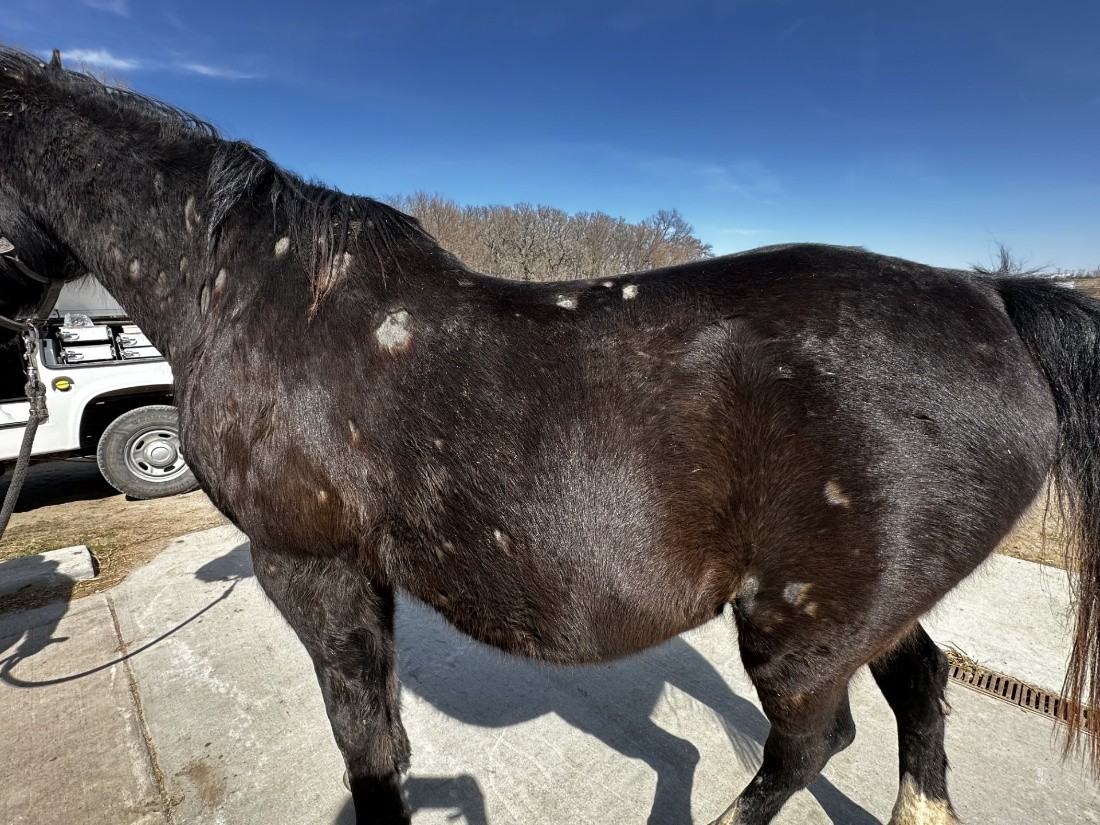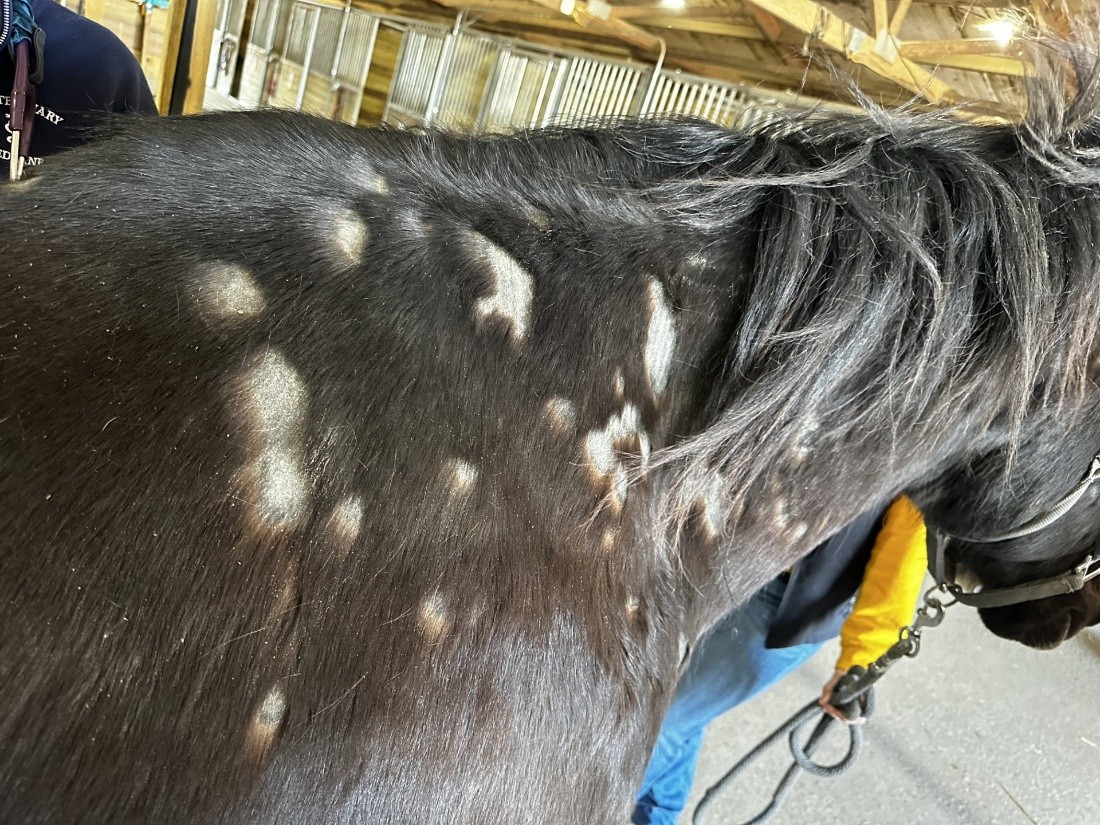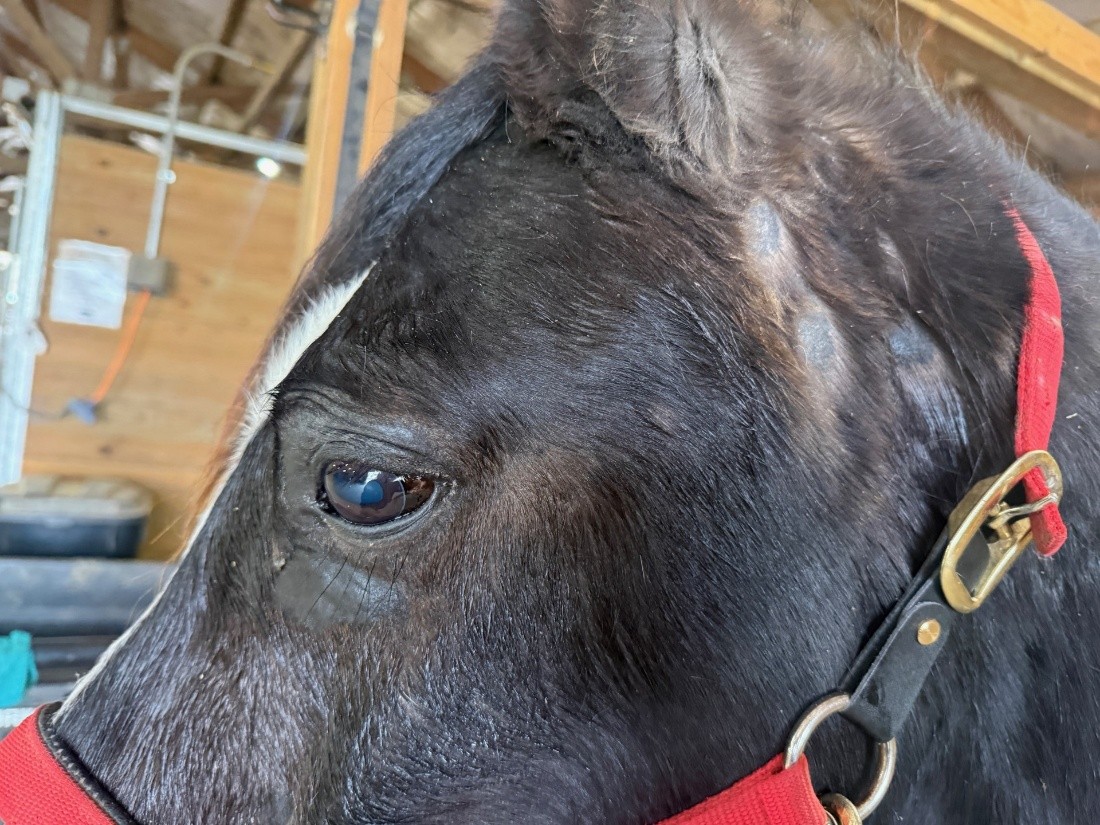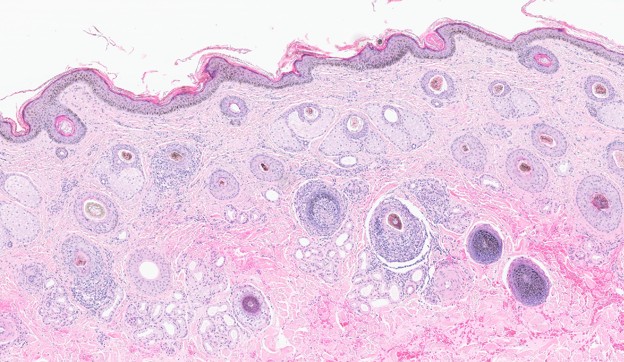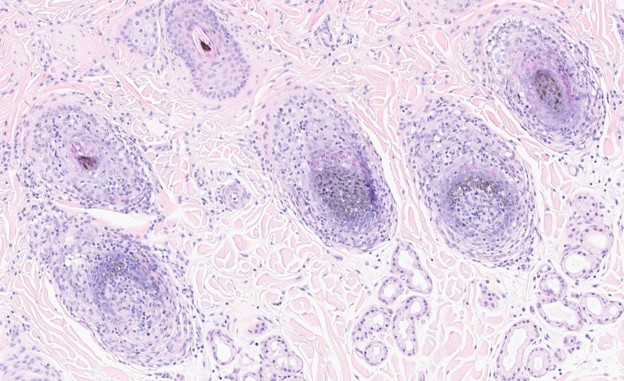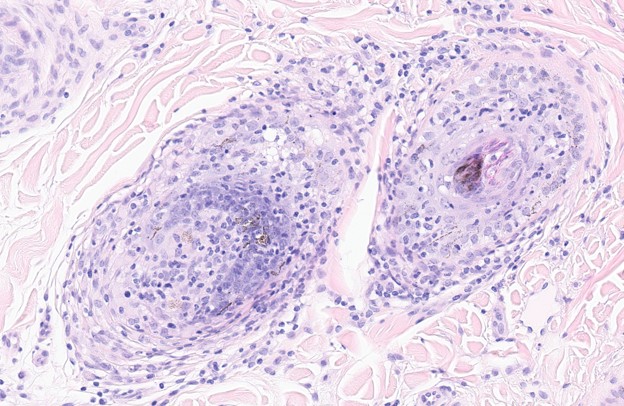
Figure 1. 

A 6-month-old spayed female Domestic Shorthair cat presented to the ER on 3/7/21 for difficulty breathing (dyspnea). About one month prior, she began hiding and showing behavioral changes, and approximately two weeks prior she developed a limp. On the day of presentation, her referring veterinarian noted a nasal mass and sneezing. Despite these signs, the cat maintained a normal appetite and water intake, with no vomiting or diarrhea reported.

Clinical description:

The dermis and subcutaneous tissues of the nasal and frontal bones, caudal to the bridge of the nose, contain a multinodular, firm, tan, 2x1x0.5 cm, raised mass that extends into and partially effaces the nasoturbinates (pyogranulomatous dermatitis). Upon cut section, moderate amounts of creamy-white, purulent material exude from the mass (pus).


FIGURES

Figure 2. Diff-Quick, 400x.


Figure 3. Diff-Quick, 400x.

Figure 4. H&E, 20x magnification.


Figure 5. H&E, 400x magnification.

No answer selected. Please try again.
Please select either existing option or enter your own, however not both.
Please select minimum {0} answer(s).
Please select maximum {0} answer(s).
/component/communitypolls/poll/78-june-2026-what-is-the-most-likely-etiologic-agent?catid=14:case-of-the-month&Itemid=101&task=poll.vote&format=json
78
radio
1
[{"id":330,"title":"Histoplasma capsulatum","votes":69,"type":"x","order":1,"pct":64.49,"resources":[]},{"id":331,"title":"Cryptococcus neoformans","votes":34,"type":"x","order":2,"pct":31.78,"resources":[]},{"id":332,"title":"Blastomyces dermtitidis","votes":2,"type":"x","order":3,"pct":1.87,"resources":[]},{"id":333,"title":"Coccidioides immitis","votes":2,"type":"x","order":4,"pct":1.87,"resources":[]}] ["#ff5b00","#4ac0f2","#b80028","#eef66c","#60bb22","#b96a9a","#62c2cc"] ["rgba(255,91,0,0.7)","rgba(74,192,242,0.7)","rgba(184,0,40,0.7)","rgba(238,246,108,0.7)","rgba(96,187,34,0.7)","rgba(185,106,154,0.7)","rgba(98,194,204,0.7)"] 350
 

Check Answer